Thursday, 8 August 2013

Tick Tock Toys (part 2)

In part 1 of my in-depth look at the game Tick Tock Toys I gave an overview of the game, looked at the team behind it, and covered the project management.

In part 2 I'm going to look at the aesthetics of the game.  It's apparent that a lot of thought (and hard work) has gone into the look & sound, and I'd like to investigate this before moving onto the mechanics.

Audio


As you'd expect, the game features appropriate event sounds (e.g. the xylophone, or the clashing of swords when the knight moves).

One major audio feature is the Michael Nyman-esque piano soundtrack, which runs continuously in the background.  Cam Goold has done an impressive job technically -- InsideSocialGames describes the piano work as "high quality" and "haunting" -- but in my personal opinion I'm not totally convinced that the music suits the mood of the game.  (Mind you, if I'd been on the team I'd probably have pushed for an oom-pah band soundtrack instead, which would've probably lost them the BAFTA).

Appearance


On the initial levels the RYB primary/secondary colour scheme certainly reinforces the whole 'toys' theme.  The target audience is mainstream with "a wide age range", so I'd imagine that this colour choice also helps with making the game appeal to young children.


The cartoony graphics also reinforce the 'anthropomorphic toys' theme.  (A photorealistic appearance would have been at odds with the fantasy nature of the mechanic, and would also introduce problems with scale.)  Indeed, I wonder if the designers had possibly considered toon shading at some point (Kristian had done some lovely cel-shaded rigged 3D models in Maya when he was an undergraduate).  Mind you, the 'cost' (in processing terms) of this is probably too much for the iPad.

I know that the team fiddled with the camera angle early on, and this is something is something which I find fascinating.  I've surmised that the team started with a direct overhead view (see below) but realised that it obscured the appearance of characters & objects too much.  It's conjecture on my part, but I suspect I'm not far off the truth.

Overhead view at the end of Week 1 of development
This creates a dichotomy.  The primary game mechanics require an aerial view, to enable the player to see the floor path.  Dropping the viewing angle improves the visibility of 3D objects but also shrinks anything in the distance; larger objects will obscure smaller ones, and also hamper the view of the floor.

This viewing angle shows more of the object in 3D and also allows the top wall to house controls.
The team's solution -- a shallow drop in angle -- represents the best of a no-win situation.  Having considered a number of other perspective & isometric viewpoints, I believe that the only way around this would be to introduce a moving camera, which would add a lot of extra work and complicate the player's user interface considerably.

A similar issue plagued my own Eggles game design.  I'd be interested to see what difference it would make to Tick Tock Toys if this game had a 2D aerial view only, with graphics optimised for 2D (i.e. symbolic rather than realistic 3D shape).

Environment, characters & objects


Let's start with the first toybox.  Official screenshots (like the one below) show it as garish purple, but it's less saturated in the actual game on the iPad.  Perhaps this relates to the iPad's screen?  The purple provides a good contrast for the robot's yellow body, anyway.  I can't remember seeing many wooden boxes with vertical panelling at the sides, so I'm guessing that the stripes serve to emphasise the perspective.


The robot (Tic Toc) has the standard characteristics of a 1940s toy robot: square head & body parts, clockwork key, front chest controls, and side-to-side wobble when walking.  He also sports an antenna, a common feature of 1950s science fiction robots.

The first tin toy robot was the yellow Lilliput robot (left) made in Japan.
I'm guessing from the colour & ears that this was an (indirect?) influence on Tic Toc.
An iconic design, it's still available today as a replica for collectors.
Nostalgia in action!

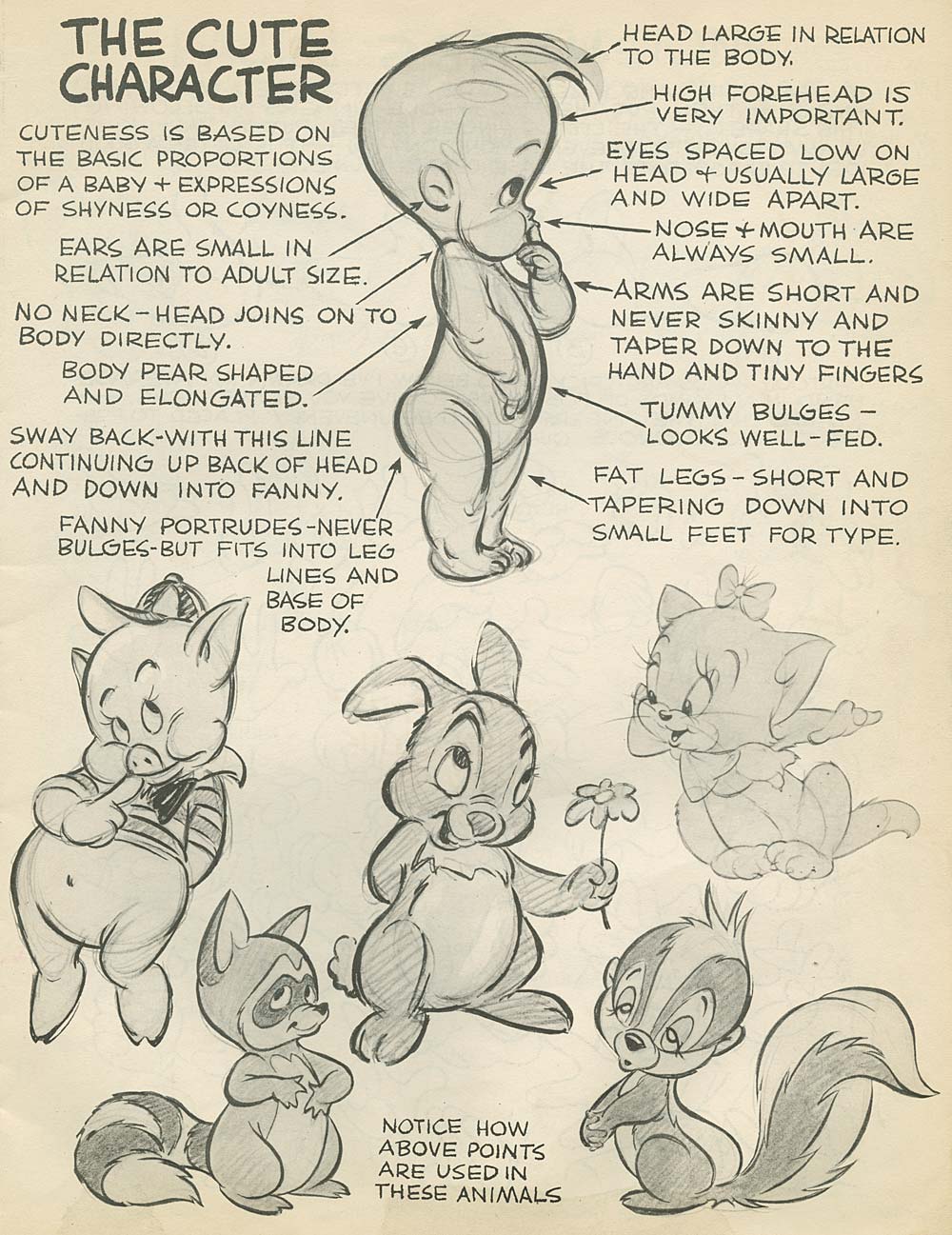
The squat appearance, large forehead / low eyes (and ears) and walking posture (arms leading) give him the appearance of a child -- you can see similar characteristics in the work of legendary animator Preston Blair -- and the flexible arms give greater room for characterisation in movement.  The rounded corners add a 'soft' feel, creating an extremely endearing character who really comes alive in cut-scenes.

Notice the key in his back.  This is something that I'll talk about in the mechanics section, but it's proportioned nicely and is easily recognisable as a clockwork key.

When I first played the game, one thing that really jarred was the frogs.  I'd not come across press-to-unroll-tongue frog toys before, but it's immediately apparent that the ones in the game look far less like toys and a bit too much like real frogs.  They also have a bit of a tin lithography appearance -- possibly to fit in with the tin robot?


The other characters (rag doll, bear, rubber duck) are all lovingly created to keep the 'cute' factor going.  Objects (building blocks, ABC blocks, wooden trains) are a little more realistic in appearance.


Animation


Aside from the character rigging and controlled movement, there are some bonus animations which add significantly to the game.

My personal favourite is seen at the start of each room.  The robot's appearance is accompanied by an expanding ring of light, which half-illuminates the room; this is followed by a similar ring which fully illuminates the room.  Both serve to focus the player's eyes on the start and end points, and this trick ensures that the player can't fail to understand their goal.

The celebrations act as a nice reward for the player, and the cutest one is the end-of-room mini-celebration when Tic Toc reaches the frisbee: a dance, with confetti falling from the sky (just on Tic Toc in early rooms, but into the whole room at the end of a level).  The end-of-level celebration cut-scene gives a break from the box view and lets us see the characters in their full glory.

I could spend ages analysing the aesthetics in even more detail but I feel I've got the general feel of things covered.  Next post we're onto the game mechanics...

Tuesday, 6 August 2013

Tick Tock Toys (part 1)


Overview


I'm taking an in-depth look at the development process for Tick Tock Toys.  There are a number of questions that get raised along the way, many of which I'm intending to pose to team leader Sophia George.

"Tick Tock Toys is a 3D puzzle/maze game which takes place inside a cluttered toy box. Your aim is to alter the position of the objects inside to clear a path for the clockwork robot to reach his frisbee goal.

All of the objects are there to be played with; some will help you solve your puzzle while others will hinder you. As you play, these toys form an orchestra to aid and accompany you.

As an iPad game there is an emphasis on tactile exploration and the freedom of 'pick up and play'. The levels are short but vary in difficulty, layering the central mechanics to create a complex maze which may take longer to solve."
The final commercial game is available for iPad & iPhone, has 15 free levels and a further 105 IAP (in-app-purchase) levels, with themed toyboxes and iCloud support.

Personnel


The development team was brought together for the Dare to be Digital competition:
  • Sophia George -- designer, 3D artist, animation/rigging & textures
  • Kristian Francis  -- 3D artist & level designer
  • Rosie Ball -- lead 2D artist (concept, logos, promotional & motion graphics)
  • Calum ("Cam") Minuti-Goold -- lead audio
  • Mark Bamford -- lead programmer
Sophia, Kristian & Rosie had all attended Norwich School of Art & Design and applied as a team, finding an experienced programmer (Mark) and audio engineer (Cam) through the Dare website.

Dare team: (left -to-right) Mark, Calum, Rosie, Sophia & Kristian

After completing the Dare project, Rosie gained an internship & design position at Disney Interactive, working remotely for a while.  Sophia, Kristian & Cam went on to do the MProf in Games Development at Abertay University in Dundee; Mark completed his BSc in Computer Games Technology at Abertay.  Development continued, "every weekend from September to Christmas working on our game in Cam's bedroom" in preparation for the final BAFTA decision.

After graduation, with help from Abertay's game development prototype fund, Swallowtail was set up as a proper limited company in June 2012 -- with the aim of releasing the commercial game in January 2013 -- and the team gained two new members to replace Rosie: a programmer from the MProf course and an artist from Norwich.
  • John Cooper -- programmer (metrics, gameplay, UI, shaders & animation)
  • Kaliegh Branham -- artist
Production team: (left-to-right) John, Kristian, Sophia, Calum & Mark

The commercial game was finally released in February 2013 and Sophia & Kristian have continued at Swallowtail, trying to kick-start other projects.  Cam is now a developer for 8Dio Audio; Mark has moved on to a junior programmer role at Tag Games in Dundee.

Project Management


The game was built using the Unity game engine, which the Dare team found "easy to pick up" (-- precisely the same reason that I use it when teaching game design, rather than UDK --) and followed a strict process:
"Every day we'd have a morning meeting to split the work up.  We'd run weekly timetables to keep everything on schedule, but often found ourselves finishing the tasks mid-week."
It's interesting examining the Dare to be Digital diaries, interviews and videos produced by the team, which give a rare insight into the whole process.  Here's a summary of selected weeks:

WEEK 1:  KEY ASSETS & TRIAL LEVEL.  Producing 3D models and initial animations; integration of mechanics and testing object dragging & tilt control on iPad.

An early level implementation.  Note how the camera is  positioned dead overhead.

The team explain that they worked with a "scale chart" (not sure what they mean here -- presumably a map of how challenges ramp up as levels progress; must find out!) to help with level design, programming & concept music.  The work was successful, leaving time to polish mechanics and experiment with camera position.  (Note: I'm very interested to find out why they settled on the final camera position)


WEEK 2: ANIMATION, MENU & POLISHING.  Further music work along with foley sound effects recording; building the menu and polishing gameplay.  Character rigging for animation.


At this stage the team feel that everything is going well, and on schedule.


WEEK 4: AESTHETICS.  Improve appearance; integrate sound into the build; produce a mini-trailer; initial particle effects.


The team started well: spent an entire day playing with lighting & shadows, but ran into technical snags, such as effects which weren't supported properly on the iPad, and stuff that lowered the frame rate significantly.  (The frame rate issue has cropped up on the iTunes customer review page for the final commercial version, so I'm guessing that the game still runs close to the limit of what the hardware will handle.)  However, the overall progress was seen as significant.

WEEK 7: FURTHER LEVELS.  Getting further levels done.  Japanese level working but no loading screen yet; replacing placeholder characters.  Some things just take time: it took Rosie "a whole day to animate the logo" on the menu screen.

Schedules have started to slip.  The team has switched into crunch time and is working late (10pm); looking at the video, there appear to be a number of other teams in the same situation.


It's clear that the success of the project has hinged on careful scheduling and time planning.  The team have set achievable goals and appears to be meeting them.  This also included experimentation, and it'd be interesting to find out how they judged the amount of time needed for this.  I'd also certainly like to know more about the "scale charts" mentioned earlier.

It's fairly evident from the videos, though, that they're starting to tire of the game by week 7 -- something worth considering on bigger projects, where a break is not only desirable but necessary.

Well, that's the end of part 1.  Part 2 will follow, looking at the main game elements (aesthetics, mechanics, narrative & technology).

Monday, 5 August 2013

Profile: Sophia George

A few months ago, course tutor Josh Taylor brought my attention to a game called Tick Tock Toys.  It was apparent immediately that there was common ground between this game and the practical work I had done for my 'Eggles' game, so I vowed to interview the game's creators.


During the last few weeks I've made contact with Sophia George at Swallowtail Games, who has kindly offered to answer questions on aspects of the game's structure and on her philosophies as a designer.

While preparing questions I started to delve deeper into the background of the game, and Sophia's role as lead designer.  This has been a very enlightening exercise, so I've decided to post some of the stuff I've learned.  It has already had an impact on my personal development: reinforcing & challenging some of the concepts which have been outlined in this blog.

It's also grown into a bigger case study than expected.  Therefore I've split the summary into two posts: one looking specifically at Sophia's journey into the industry and the second at the practical development of Tick Tock Toys.


Sophia George -- Journey of a Games Designer


Sophia has had a quite prodigious rise over the last few years.  Her team started work on Tick Tock Toys in  2011 and, after finishing her Masters in 2012, she co-founded Swallowtail Games and released the game to great acclaim, gaining a BAFTA award in the process.  And, as if that wasn't enough, she has since been appointed as the prestigious V&A museum's Games Designer in Residence.  Not a bad start to a career!


Her interest in this field started when she was little.  In an interview on BBC Radio Scotland, she explained that she had grown up playing early Nintendo titles like Mario & Kirby as well as games on her Commodore Amiga 500.  Like many of us in this profession, in her youth she was quite geeky; she even learned a bit of Japanese at the age of 12 due to her interest in Japanese games.  Sadly this inevitably led to her being bullied, but thankfully didn't stop her following her passion.  She'd been fascinated with characters, cartoons & colours and liked to experiment with art software (presumably Amiga Deluxe Paint).

DPaint III  had some wonderful editing & animation features
that (in my opinion) even Photoshop still hasn't bettered
-- something that Neil Thompson mentioned at BAF 2012
when talking about his time at Psygnosis).

In 2008 she moved on to study for a BA in Games Art & Design at Norwich School of Art & Design, now re-named Norwich University of the Arts.  (The school has an impressive roster of alumni, including legendary comic artist Brian Bolland and Harry Potter movie designer Stuart Craig.)

Sophia graduated in 2011 with first-class honours.  Alongside her final year studies, she prepared a submission for the summer Dare to be Digital competition organised by the University of Abertay.  This competition sets teams of 5 people the task of designing a fully-functioning game prototype in just 10 weeks, to be displayed at the public Dare Protoplay indie games festival.  The entrants are judged by industry experts and the best three nominated for the BAFTA Ones to Watch award.  Sophia's team -- Swallowtail -- produced Tick Tock Toys, which won the award.


(The development of Tick Tock Toys will be explored in much more detail in the next post.)

Sophia then moved to the University of Abertay to do a Professional Masters (MProf) in Games Development.  During the course she worked on a couple of team game projects:


It'll be of little surprise that Sophia graduated from her Masters "with Distinction".  She immediately took on a role as "Chair, Artist & Designer" at Swallowtail Games, working alongside 4 other team members and a gang of freelancers, releasing the final production version of the game in February 2013.

Gender in gaming


It was during her BA that Sophia started to carry out research into gender in gaming.  Of the 8 girls in her class, 4 had dropped out before the end of the first year.  In an interview on the WomanTalking website, she explained: "I never had any issues with the other male students but outside the classroom there were very few girls I knew who enjoyed playing computer games. But for an industry that’s been around for over 30 years, there’s a substantial amount of history building up that begins to give it a lot more credibility."

This was nowhere more evident than on a visit to Eurogamer Expo.  While waiting outside, security guards presumed that she was in the wrong queue and tried to redirect her to the Earl's Court Wedding Show.

Her report "How should the games industry present gender imbalance?" explored the presentation of women within games and the lack of games targeted at women's tastes and interests, highlighting the (prevailing) surge in casual gaming.

After starting her Masters, her second report, "Engaging Women in Games Using Emotional Stimuli", took a deep look at ways of opening the AAA game market to female players, who represented a large (and growing) proportion of the general gaming market.  She quotes Sheri Graner Ray (see my own blog for more info) and Chris Crawford, concluding that emotional stimuli are an important key to this.

In her final report, "Is There a Need for Games with Gendered Narrative?", Sophia looked at feminist theory -- especially the concept of the "male gaze" -- to explore the potential for "gendered narrative".  Her findings are mixed, but it is evident that she is developing an interest in whether the best people to make games aimed at women are other women.

Sophia's example of male gaze from Mass Effect 2.
This is something that Sophia has mentioned in other interviews: "If we get more women into the development side of games, I'm sure we'll see some even more amazing and innovative games being created.”

V&A Designer in Residence


The Victoria & Albert Museum appointed Sophia as their first Games Designer in Residence, running from October until March 2014.

Being interviewed for BBC News.
"I will use the history of British design shown in the Britain 1500-1900 galleries as the starting point for my research.  One third of the residency time will be dedicated to public engagement, inviting a variety of audiences to experience and participate in the creative process of game design though an innovative programme of events and activities at the V&A [...] I plan to run a project with a group of students from a girls' school [...]"
The residency will produce a finished game in the summer of 2014, linked to interpretation of V&A collections (including the 1500-1900 galleries mentioned above).  "I like the fact that they are treating games as art because just like movies and music, they are very much a reflection of what we have enjoyed doing in our leisure time over the last 3 decades. They offer a snapshot of society in ways that might not be immediately obvious."


Building up this profile has been very interesting, providing insight into the mind and motivations of a fellow designer.  I've enjoyed it so much I'm looking to create profiles for other designers, as time allows.

Wednesday, 24 July 2013

Experimenting with nostalgia triggers

Back in November I found a clinical psychology study of nostalgia and extracted a list of major triggers:

  • Shared memories within social interaction -- "do you remember...?"
  • Sensory inputs -- visual, sounds, smells
  • Indirect association (e.g. hearing grandad's favourite song)
  • Similar events
  • Depression

A games designer cannot manipulate all of these; indeed, some of these triggers are highly personalised and unsuitable for manipulating a wide audience.  However, the majority of these triggers can be exploited by reference to common cultural experiences.

Remember the spirit-based "Banda" duplicators used by schools in the 1970s & early '80s?
If you do, you're already probably recalling that "freshly printed" smell as you read this.

Depression is certainly a tough one to address!  Certainly, it could be induced by narrative -- an excellent example being the final scene in David Fincher's movie Se7en -- but it is also something that requires careful handling to get right without alienating the audience.  I feel this would justify an entire MA project in itself, so I'm staying well away from this particular trigger.

At the end of my literature & contextual research phase, I came to the conclusion that there are specific triggers which are very well-suited to game design -- especially within the elements of aesthetics and mechanics.
  • Visual triggers (aesthetic) -- sensory input & shared memories; association with time period
  • Auditory triggers (aesthetic) -- sensory input, association with time period
  • Mechanical triggers (mechanic) -- similar events (emulating an experience or how objects behave)
In the current experimental phase of my research, I begin by verifying the methods I can use to provoke a nostalgic affect.  Forthcoming posts will examine respective (potential) visual, auditory & mechanical triggers and then seek to verify their effectiveness in isolation.  Later stages will consider them in combination and in a game context.

Tuesday, 23 July 2013

Through the back of the wardrobe...

After visiting the Land of Lost Content I found that collections of historical ephemera were few and far between -- often refuges for stereotyped crackpot enthusiasts, hidden away in backstreets, and focused on wonderfully mundane objects (such as the legendary British Lawnmower Museum or Barometer World).

While researching nostalgic items, one thing that has kept cropping up is the need to find photographic references.  Google Images is all well and good, but a large proportion of photos on the web are post-1990, so finding anything before that period can be difficult.

Then I had a flash of inspiration -- HOME SHOPPING CATALOGUES!


Yes, they're full of clothes & fashion, but they also contain a wealth of period furniture, electronic goods, and toys & games.  A veritable treasure trove of ideas!

As previously established, those grey,
black & red stripes just scream 1980s.
Look at these examples from an old 1977 Argos catalogue -- some cracking nostalgia!  Evel Knievel, Six Million Dollar Man, Starsky & Hutch, an Airfix pontoon bridge and even Super Flight Deck.


However, it was at this stage that I stumbled into a seedy, murky world...

Finding archives of home shopping catalogues is not as straightforward as newspaper or magazines.  I'd expect major libraries to carry historical design journals; the likes of Argos, Littlewoods, Kays, Marshall Ward or Grattan are less likely to grace their shelves.

So I went looking online for individuals who might have odd scans of pages from old catalogues.  What I discovered was a major black market in full catalogue scans.  I kid you not!

Dozens of people scanning catalogues, converting them to PDF and selling them on eBay. A few examples: Freemans 1994, Brian Mills 1997 and even an Argos 1974-1986 compilation.  If you don't believe me, take a look for yourself.  Of course the spurious "public domain" or "copyright permission" claims are all claptrap, but I can't see Home Retail Group wasting their time & money chasing these people with solicitors.

This is not a new concept.  There is a similar huge market for scanned comics, especially those which have never been released digitally by copyright owners.  However, home shopping catalogues are not the kind of thing you can read again-and-again; this is an extremely niche market.

Obtaining paper copies is just as difficult.  A typical paper mid-1990s Kays catalogue goes for around £22.  Wow!  Given that the primary owners of these publications were women, it adds a new irony to the old chestnut "my mum threw out all my old comics and they'd be worth a fortune now".

So, where do I go from here?  Do I spend a fortune obtaining illicit copies of Freemans mail order paperbacks?  Do I join the ranks of uncomfortable-looking men in long coats who furtively pass telephone-directory-sized tomes to each other in back alleys, hoping that nobody is looking?

Thankfully not.

It turns out that there are some official archives of this kind of thing.  Phew!

The Kays Heritage Group has a collection dating from the 1890s to modern day, available for research purposes and housed at the University of Worcester.  Sounds like a good idea for a day trip!