Friday, 24 May 2013

Status Report

Blimey!  It's been a few weeks since my last post.  As usual, full-time work has taken up most of my time (mostly marking student work).  Development for my MA -- which had been proceeding at a snail's pace since March anyway -- had pretty much ground to a halt.

However, last week the third MA course module concluded with a review of what had gone before, and laid out plans for the next six months.  This gave a good opportunity to kick-start things again, so I thought it would be a good idea to give a status report to set the scene for future posts.


I've drawn up a list of 23 tasks that need to be carried out for Practice 2 and scheduled them using a Gantt chart.  In an unusual move, the scale on the chart is relative -- using 'cumulative hours' rather than dates -- because I've discovered (the hard way) during the last 9 months that project work and full-employment work do not play well together.

Wednesday, 1 May 2013

Applied Nostalgia: That 1980s Look

In my previous post I looked at how to achieve a 1970s mood visually.  This time I'm looking at the 1980s.

The first thing to note is that I'm deliberately avoiding iconography -- so no Rubik's CubesNew Romantic pop posters or asymmetric hairstyles.  Instead I'm trying to suggest the period by use of colour, decoration and lighting; to provide a context for other items.

I'll start by looking at others who have tried to conjure that period visually in pastiche.  (This gives a quick route to identifying the common signifiers, and saves re-inventing the wheel).

First up is the 2008 TV series Ashes to Ashes, in which detective Alexandra Drake was transported back through time into a stylised world of policing based on shows like The Gentle Touch, The Professionals and Dempsey & Makepeace.

See the programme intro here.
Next is the cult phenomenon Garth Merenghi's Darkplace.  This series captures many of the stylings associated with cheap VHS horror movies.

Clip here.
This even continues to the DVD cover which does a cracking job of capturing the "airbrushed glow" look of posters from this era.


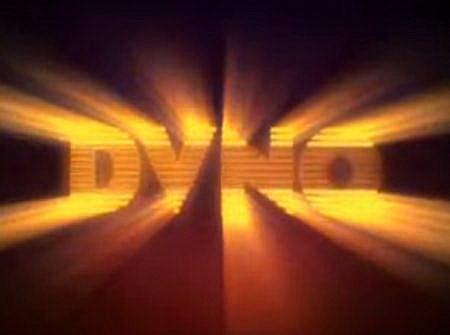
Talking of VHS (and on a general graphic design theme) next on my list is Justice's DVNO music video (2007), produced by the Machine Molle animation & VFX company.  This video takes song lyrics turned into the kind of animated logos associated with companies like HBO, CBS Fox and Cannon Films during the 1980s.


Analysis


To achieve a 1980s look, a number of factors need to be included:

Signifier:Black
Why?In the 1980s, black was the new brown.  Film & video from this period is generally better preserved than 1970s stock, so the blacks are also a lot darker.  There is heavy use of darkness and night-time as background (as opposed to the sunny look of the 70s).

There were quite a few movies & TV shows in the 1970s with night-time scenes, but this seemed to become the prevalent look in the early 1980s.

Night-time scenes became more common in the 1980s,
as demonstrated in this still from Joe Jackson's Steppin' Out music video

Signifier:80-85: Undersaturated colours (especially reds & blues); gold; black & white in contrast;
85-90: Pastel shades, overlit.
Why?The 1980s palette is much wider than the previous decade; although primary colours are evident they are not vivid.  This may be due to degradation of video tape (on which many programmes were shot, to save money).

Here's a couple of examples of this in action:

Gary Numan, performing his Telekon album live.
Note the muted red in contrast to the black.
Larry Blackmon from the band Cameo in 1986, with  trademark red codpiece.
Note the pastel shades (behind) starting to come in.
The image below is from the 2005 Doctor Who episode Father's Day, which portrayed a wedding in the late 1980s.  Although the general filming style of the episode fails to capture that period look, the make-up, hair and clothes do a good job of following the pastel colour scheme associated with the latter half of the decade.


Signifier:Stripes!  Stripes!  Stripes!
Why?In clothing, coloured stripes were fashionable, usually in contrast to black or white.

The image below shows a number of elements in combination: red-and-black striped leotard (note the muted red); and black leg-warmers and footless tights.


This also extended to lighting: with the emphasis on darkness, scenes are often lit by light coming through blinds or bars.

The "lit through blinds" technique just screams '80s
in this scene from Blade Runner.

Signifier:Glow
Why?Although airbrushed artwork had been around during the 1970s, the effect started to move into video work in the following decade.  Cartoons like He-Man and the Masters of the Universe featured glowing magic

Cartoons like He-Man and the Masters of the Universe featured incandescent elements as a matter of course, and most logos were not complete without an edge glow.


Next time we'll be looking at the difficult-to-pin-down 1990s.

Saturday, 20 April 2013

Applied Nostalgia: That 1970s Look

During a discussion about the Scarfolk posters, top course tutor Josh Taylor persuaded me to investigate the ways of getting a period feel with minimal effort, using things like lighting or colour.

One pertinent example from recent weeks which generated a lot of buzz was Kevin Eldon's Amish Sex Pistols sketch, which recreated the infamous Bill Grundy interview of 1976 with unerring accuracy.

Click here;to see the It's Kevin clip;
You can also see a side-by-side comparison with the original here.

Of course, this isn't the first time that anybody has done this kind of thing.  But it serves as a good example to start the ball rolling.

Let's examine a shot from the TV series Look Around You, which spoofed 1970s education TV shows like Tomorrow's World and BBC Schools and Colleges.

Click here to see an example clip from the show.
Here's another example.  This music video was shot on a Liverpool council estate in 2007 but has been made to look as though it was made in the mid 1970s.

Sonny J's Can't Stop Moving video

Analysis


Let's analyse some of the semiotics being used here.  According to UCLan contextual studies lecturer James Battersby there are three main types of sign:

  • ICON -- resembles its referent. (e.g. wheelchair image for disabled parking spot)
  • SYMBOL -- related to its referent by convention.  (e.g. fast forward button on a DVD player)
  • INDEX -- associated with its referent.  (e.g. flat line on heart monitor = death)

In these examples, the time period is predominantly communicated by index.  This is important, because it means that the viewer has to be familiar with the association, otherwise the sign is meaningless.

Signifier:Faded colour
Why?1950s to 1980s period.  (Colour photos/film were rare before 1950, and older images fade more, especially vibrant reds & blues.)

The following photo illustrates this well.  At first glance it's an old photo but it was actually taken by photographer Jon Nicholson in 2012 as part of a series of images for his book Seaside Polaroids.


Nicholson's images use traditional chemical methods, but they are intended to contrast with the famous Instagram "1977 Filter" which achieves similar effects by adjusting the image digitally through a series of stages:
  • Adjust curves to "pull up the shadows", i.e. make blacks and dark greys lighter, reducing contrast.
  • Overlay a mild pale green tint, affecting the darker colours more.
  • Overlay a subtle "slightly scratched" texture, and slight blurring if wanted.
Signifier:Brown & beige, and a bit of orange too
Why?Fashion in the 1970s was unremittingly brown.  This re-occurred in the early 2000s but focuses on darker browns and creams.

There are exceptions to this, of course.  (For some unknown reason Star Trek: the Next Generation (1987) used tons of beige.)


Signifier:Sunshine & lens flares
Why?The summer of '76 is famous for being one of Britain's worst droughts, but for many youngsters the long summer school holidays and heatwave created a strong association with sunshine and the 1970s.

This also accounts for the washed-out shadows mentioned earlier.


Signifier:Patterned wallpaper
Why?Patterned wallpaper was nothing new, and had been a mainstay of Victorian fashions.  However, the 1970s saw an explosion of oranges, brown & white patterns adorning walls.


So, these are just a few ways to get that 1970s look!  I'll be examining other ways as I think of them, and looking at other periods in later posts.


Friday, 19 April 2013

Applied Nostalgia: Scarfolk

A recent article in The Independent led me to to work of graphic designer & illustrator Richard Littler.

Littler grew up fascinated by public information films & propaganda in the 1960s & 70s, and the way that they displayed "some quite outrageous societal attitudes toward race, gender, and children":
"I was always scared as a kid, always frightened of what I was faced with. You'd walk into WH Smith and see horror books with people's faces melting. [...] I remember a public information film made by some train organisation in which a children's sports day was held on train tracks and, one by one, they were killed. It was insane."
Littler has produced a series of mock posters based around the fictitious town of Scarfolk, in brilliantly accurate period trappings, parodying the genre.  Careful choice of muted & faded colours, typefaces and art style make these some of the best examples of this kind of thing I've seen in some time.


He has taken these ideas further to parody the cultural trappings of the period, making use of wonderfully inappropriate contrast or by highlighting the mundane nature of the original:


Postmodernism in game design


On the surface Littler's work doesn't immediately appear to have any links with video game design.  However, one of the main things I'm concerned about in my own project work is evoking period without transgressing trademarks or copyright.  For example, in early drafts of my Eggles game, I've used an LP cover for The Shadows' 20 Golden Greats -- iconic in its time and easily recognised.  Trying to get copyright clearance for this former EMI asset would likely be a nightmare (and costly).  So, at some stage, I'm going to have to adjust the LP cover to turn it into a pastiche of the original.

Littler's work here shows a way to make that step smarter, by extending it into the realm of parody -- something which adds value to the exercise.  Literary critic Fredric Jameson had particularly strong views on this:
"Pastiche is, like parody, the imitation of a peculiar or unique, idiosyncratic style, the wearing of a linguistic mask, speech in a dead language. But it is a neutral practice of such mimicry, without any of parody's ulterior motives, amputated of the satiric impulse, devoid of laughter and of any conviction that alongside the abnormal tongue you have momentarily borrowed, some healthy linguistic normality still exists. Pastiche is thus blank parody, a statue with blind eyeballs [...]" 
Having grown up coddled by TV comedy shows full of pastiche -- like The Two Ronnies or Russ Abbott's Madhouse (well, it all seemed funnier when I was under 10 years old) -- I find myself in agreement with Jameson.

This is a great example of the reasons why game designers need to take a cross-disciplinary approach.  The lessons learned from Littler's work will have an effect on aesthetics within my game.

I believe there is a lot of potential in using parody rather than pastiche, where possible, to enhance the nostalgic experience ... so long as it does not undermine the familiarity of the artefact, or the affect which  I am seeking to exploit.

Monday, 15 April 2013

Applied Nostalgia: The Witness

The following image is a screenshot from the forthcoming game The Witness designed by Jonathan Blow.  The game is a first-person "exploration-puzzle game" set on an island -- which sounds a bit like a modern version of Myst to me (and I'm not the only one to think that).

The image below was taken from a development blog by one of the game's sound designers.


A vinyl record turntable in a forest?  Woah there!  An example of nostalgia applied within video game design?

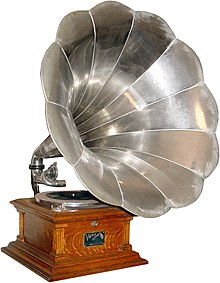
Very nice visually, but why a record player?  Why not a CD player or an MP3 player or, well, a laptop with big speakers?  Why not a gramophone player with big horn?

First, let's look at the target audience for the game.  This kind of game is normally aimed at older players, and often a predominantly female market.  So the record player makes sense as a reference, and triggers both a nostalgic affect and a "quirky" feel fitting with the aesthetic mood.

But ... we'd normally associate this kind of audience with iPads or laptops.  So why is this releasing first on the PS4?  Jonathan Blow seems to be taking advantage of the publicity of being a launch game for a new console, and also of having something a little different to the typical AAA games which accompany such.

But surely the primary target audience for the PS4 is going to be spotty teenage boys C1C2DE males aged 18-40?  (Indeed, I spotted the forest image this while researching PS4 & Xbox 8* technology.)  Where does that fit in?

Jonathan Blow says that everything in the game "is there for a reason".  I suspect that the decision to use a turntable is more down to his age (42 years old) and a personal fondness for the old technology, rather than specifically as a visual nostalgia trigger.  However, it's nice to see in a prominent game!
__________
* (no, against all popular opinion I simply refuse to believe they'll call it the Xbox 720)