Sunday, 10 March 2013

Phase 2: Work in Progress

I'm behind with the blog at the moment, with delays caused by paid employment and illness.  There are a number of posts I have half-written, and I'll post them (backdated) in coming days.


Partial, rough level


The video below shows a partial level that I made last week.  I'm still finishing it off, but you can see the basic idea of how it works.


The important thing to note is that what you see here is not an animation, and events are not timed in any way.  It shows the game engine responding properly to events and triggers, and collisions between objects.

At the moment I'm focusing on the player controlling the game by clicking on certain objects and adjusting a setting for them, which will alter whether the contraption works or not.
  • Fan.  When the level starts, this switches on and takes a few seconds to get up to full speed, whereupon it blows the Eggle off the platform.
  • Under the record sleeve is a balloon.  This can be inflated or deflated to adjust the angle of the sleeve, changing the slope.
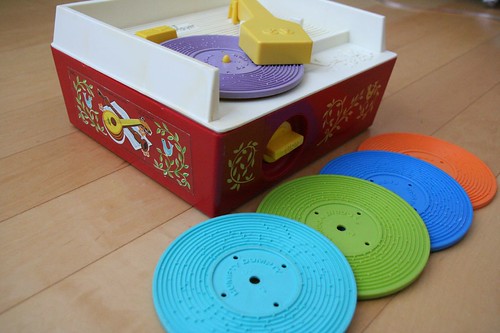
  • An Eggle falls onto the turntable and is forcibly ejected at an angle, depending on the turntable's speed setting.  (Eventually, this will be an imitation Fisher Price record player but I haven't built a 3D model of that yet.) 
  • The ejected Eggle knocks a hammer over, which falls onto the control panel of the Space Truk.  The player will need to program the truck to follow a specific route to hit the next trigger.
The basic idea is working well, and the problems with physics are starting to get ironed out.  I'm still having a nightmare with friction, but you can read more about that when I've published my missing posts.


3D Printing & Nostalgia

Back in October 2012 I posted about 3D printing, looking at potential applications within video gaming.

After doing a test 3D printing project myself, I got to see the impressive Rapid Prototyping facilities in UCLan's Art & Design department workshops, including examples of CNC foam-cutting, traditional stereolithography and cutting-edge granular colour printing.  Very impressive.

Since then I've kept a casual interest in the subject.  Today, while doing research for my game project, I came across a novel use of this technology...


Led Zeppelin on the Fisher Price record player

Back in the 1970s, Fisher Price produced a toy record player which used plastic discs to play nursery rhymes.  The discs had small notches which triggered note chimes as they passed across a collection of levers housed in the needle arm.  Essentially, it was a music box with interchangeable tunes.


British engineer Murphy had been experimenting with re-creating these discs using a CNC milling machine (computer-driven cutting tool).


A video of Fred's disc for Stairway to Heaven.
(If you're wondering why it sounds funny, it's because the record player does G# scale only)

He has updated the process to create software for making discs quickly and easily using a method based on 3D extrusion printing.

This is certainly a very creative application of 3D printing, and demonstrates a way to breathe new life into nostalgic items.  Fred Murphy, I salute you!

Tuesday, 19 February 2013

Phase 1: Ideas & Planning

I'm currently in Phase 1 of development for my nostalgia-themed, contraption-based game.  This is concerned with getting the basic ideas in place, and testing whether the game is feasible.


EGGLES!


As identified in initial brainstorming, the aim of the game will be to set up a chain of events with the goal of hitting a final trigger point.  If any of the events fail, the trigger will not be hit.

The primary mechanic will be based on Weebles: small egg-shaped toys popular in the 1970s & 80s, they wobble around on their base but stay upright due to a low centre-of-gravity.  Available in a range of characters, they come with playsets allowing them to be used like dolls or (limited) action figures.

Weebles originate from America and are based on based 'Punching Clown' toys featured on a long-running TV show called Romper Room.  They were developed by Playskool toys (part of Milton Bradley and later Hasbro) but sold in the UK by Airfix.

Airfix Weebles had a very different appearance to their American cousins: rather than having a uniform egg shape, they were moulded to character designs using pink plastic.


Following a brief flirtation with "New Generation" Weebles, they appear to have reverted universally to the US version with clear plastic and flat faces.

I'm going to use the Airfix pink Weebles for my game, as they will hit the main nostalgia triggers for my older target audience, yet will be recognisable as Weebles to younger players.

The main inspiration for the whole game mechanic comes from my sister Julia's Weebles Daredevils Circus set.  This set included a spring-loaded cannon, hoops, see-saw, diving board, trampoline and stilts.  We would set these up -- with other toys, occsionally -- to form a contraption-style chain of events: the cannon Weeble would hit the stilts, knocking them over; this would then knock the diving board, which would topple a Weeble onto the to trampoline, etc.


Now, there is a slight problem with this whole concept ... and that is the name.  "Weebles" is trademarked by Hasbro, so I needed a new name.  After a fair bit of brainstorming and throwing out ideas, I came to settle on "Eggles".  My wife suggested a catchphrase, and the whole thing took shape:

Eggles waggle, but they don't fall 'ova'.


One of the key aspects of Eggles is that they don't tumble (not at least without a lot of help).  That means that they move by falling, sliding or wobbling (i.e. domino-style cascade of movement).


Planning


So what other objects would be needed to build a contraption?  I've drawn up a very short initial list of items which are immediately useful.  Obviously this will expand dramatically in later phases.


I'm using a finger to start the whole process rolling (no pun intended).  At some stage I'll try to find a more nostalgic alternative, but it'll do for now.

The Big Trak will form a tool to get longer horizontal movement. Again, to avoid trademark & copyright infringement I'll rename it as "Space Truk" and change the appearance a little.

Finally, for vertical movement I'm currently using an alien jumping toy (sprung-loaded with sucker, and with long wobbly arms).

Other items being considered include Evil Knievel's motorbike (which will need winding up -- the player could do this as live interaction), plastic parachuting soldier, the Weeble cannon, and others like see-saw, trapeze and domino toppling.

Having created a quick rigid-body physics test video on Maya, the next post will catalogue the final part of Phase 1 where I will create physics simulations in the Unity engine.

Friday, 15 February 2013

Contraption Game overview

I'm currently designing a nostalgia-driven, contraption-style puzzle game involving Weebles, Big Trak, and other items from the 1970s & 1980s.

I'll be posting more detailed development notes later this week, but the current plan -- in a nutshell -- is to work through five iterations of rapid development:

  • Phase 1: Proof-of-Concept.  This involves checking how objects will move, and whether there is potential in this kind of game.  I need to establish this quickly, before putting in any heavy design work, because failure at this stage could kill the project dead.
  • Phase 2: Draft Level.  This will be a very rough version of a working level, just to establish the playability and identify where any problems are likely to occur.
  • Phase 3: Working Level.  This will be a proper prototype, allowing alpha testing to be carried out.
  • Phase 4: Several working levels.  This will be a presentable version of the game, ready for beta testing.
  • Phase 5: Release Candidate / General Availability.  This will be a final version of the game, able to be played by the general public.

I've been working today on Phase 1: Proof-of-Concept.  The main focus is the physics of Weeble movement, which presents a number of problems -- not least the fact that Weebles wobble, but they don't fall down.  Which means they don't roll easily, so they have to slide to get from place to place.

I'll reveal the full details in a later post, but I thought it would be a good idea to illustrate the grand overview of the project with some 3D animation footage I produced while testing the rigid-body physics for Weebles:


As you can see, using Weebles gives a very particular mechanic for movement.  I'm still working out the specifics of how the player will interact with all this, but the basic idea appears to be sound.

Thursday, 14 February 2013

Long time, no post


It's been STUPIDLY busy at work these last two weeks (tons of paperwork until the early hours) so I've not had a chance to update the blog until now.


As a result, I've got a pile of not-quite-finished posts which need publishing!  So... you'll be seeing a deluge of posts from me as I "flush my buffer" (programmer speak).

Most significantly, last week saw a major change of focus after a meeting with ace course tutor Josh Taylor, It became clear that the pianola-themed game design was heading down a dead end, so I'm now working frantically on a new nostalgia-themed interactive puzzle game.  (You can read the details which led up to that, and the developments since, in the forthcoming posts.)

Please note that I'll be back-dating the posts to the dates they were written (or intended for publication).  I recognise that such time-twisting calendar-wrangling antics will probably unleash the Chrono-Cops on my sorry ass, but it's a necessity in order to avoid creating a gargantuan twenty-posts-on-the-same-day entry on Blogger.  (I'm not sure how this temporal deviance will affect email subscribers, so please check Strontium Blog online if things seem a little quiet the next few days!)